Coronation Chair: The Royal Throne That Shaped History
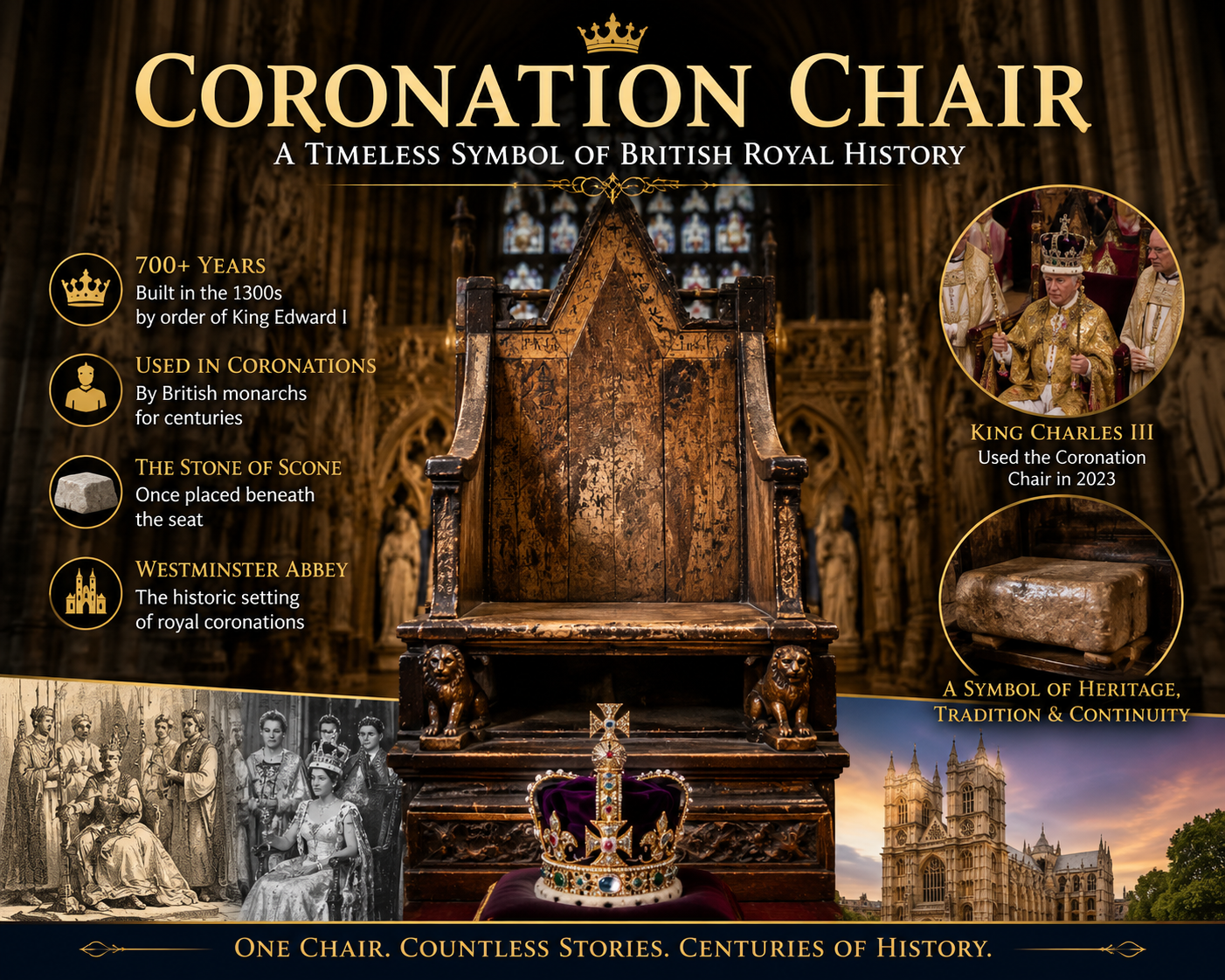
Have you ever wondered where British kings and queens sit during their coronation? Why has one chair survived for centuries while kingdoms changed around it? The Coronation Chair is not just an old piece of furniture. It is one of the most famous royal symbols in British history.
For more than 700 years, this chair has witnessed powerful moments that shaped the monarchy. Kings have sat on it before taking the crown. Queens have used it during grand ceremonies watched by millions. Even today, people remain fascinated by its history and mystery.
The story of the Coronation Chair is filled with tradition, art, and royal drama. Let’s explore why this historic throne still captures attention across the world.
The Origins of the Coronation Chair
The Coronation Chair was created in the early 1300s during the reign of King Edward I. He ordered the chair to be built for use in royal coronation ceremonies at Westminster Abbey in London.
At the time, Edward I wanted a strong symbol of royal authority. So he commissioned a grand wooden chair designed to hold the famous Stone of Scone. This stone had deep importance in Scottish coronation traditions.
The chair quickly became more than a royal seat. It became a lasting image of the British monarchy itself.
If you enjoy exploring fascinating historical stories and royal traditions, you can also visit NewsSpotter for more engaging articles and updates.
Why the Coronation Chair Matters
Many royal objects come and go over time. Yet the Coronation Chair remained at the heart of British coronations for centuries. That alone makes it remarkable.
Every monarch since the 14th century has used it during their coronation ceremony, except for a few rare cases. Because of this, the chair connects modern Britain with its medieval past.
People often see crowns, jewels, and palaces as symbols of royalty. However, the Coronation Chair carries a different kind of importance. It represents continuity. It reminds people that traditions can survive wars, political change, and even public criticism of the monarchy.
The Design of the Coronation Chair
At first glance, the chair may seem simple compared to modern royal furniture. Yet its design tells an important story.
The chair is made from oak and decorated with painted details and carved figures. When it was first built, it looked far more colourful than it does today. Bright gold paint and decorative glass once covered much of the surface.
Over time, age and damage changed its appearance. Visitors can now see scratches, carvings, and graffiti left by people centuries ago. Surprisingly, these marks have become part of its identity.
Although the chair looks worn, it still carries a sense of dignity. That weathered appearance reminds people just how long it has survived.
The Stone of Scone Connection
One of the most famous parts of the Coronation Chair is its link to the Stone of Scone. This ancient stone was traditionally used in Scottish coronations before Edward I took it to England in 1296.
The chair was designed with a space beneath the seat to hold the stone. For centuries, monarchs sat above it during their coronation ceremonies.
The stone was later returned to Scotland in 1996. However, it is still brought back to London for future coronations when needed.
This connection between England and Scotland gives the chair even deeper historical meaning.
Coronation Ceremonies Through the Centuries
Imagine the atmosphere inside Westminster Abbey hundreds of years ago. Crowds gathered. Bells rang across London. Nobles wore rich clothing while religious leaders prepared sacred rituals.
Then the monarch entered and sat in the coronation chair.
This moment marked the official beginning of a new reign. It was not just political. It was spiritual and symbolic, too.
Over the centuries, the chair witnessed the coronations of famous rulers, including Queen Victoria, Queen Elizabeth II, and King Charles III. Each ceremony reflected its own era while still following ancient traditions.
That blend of old and new is part of what makes the chair so fascinating today.
Damage and Restoration
The Coronation Chair has not had an easy life. Over the centuries, it faced damage, neglect, and even attacks.
In the 18th and 19th centuries, visitors carved initials into the wood. Schoolboys from Westminster Abbey also scratched names and messages onto it. Some people even treated the chair like a tourist attraction instead of a priceless artefact.
Then, in 1914, suffragettes damaged the chair during a protest for women’s voting rights. An explosion caused visible harm that experts later repaired.
Despite all this, the chair survived. Conservation experts continue to protect and restore it carefully so future generations can still see it.
King Charles III and the Coronation Chair
In 2023, King Charles III used the Coronation Chair during his coronation ceremony at Westminster Abbey. Millions of viewers around the world watched the historic event live.
Although modern technology surrounded the ceremony, the chair remained at the centre of the tradition. That moment showed how powerful symbols from the past still matter today.
The use of the chair also connected King Charles III to every monarch who came before him. Few objects in the world carry such a long and continuous royal legacy.
Why People Still Love Royal History
Royal traditions continue to attract huge audiences around the world. Some people admire history. Others enjoy the pageantry and ceremony. Many simply feel curious about how ancient customs survive in modern times.
The Coronation Chair stands at the centre of that interest because it represents centuries of stories. It witnessed moments of celebration, uncertainty and national change.
Even people who are not strong supporters of the monarchy often appreciate the chair as an important historical artefact.
The Coronation Chair in Popular Culture
The chair appears in documentaries, books, museum exhibitions and television coverage of royal events. Historians often discuss its role when explaining the British monarchy.
Tourists visiting Westminster Abbey also stop to see it in person. Many are surprised by its age and worn appearance. Others feel amazed knowing they are standing near an object used by kings and queens for hundreds of years.
Its fame continues to grow whenever a new coronation takes place.
FAQs About the Coronation Chair
Where is the Coronation Chair now?
The Coronation Chair is currently kept inside Westminster Abbey, where visitors can view it as part of the abbey’s historic collection.
What is the coronation chair called?
It is officially known as the Coronation Chair. Some people also call it Saint Edward’s Chair because of its connection to royal coronation traditions.
How old is King Charles’s coronation chair?
The chair was built around 1300, which makes it more than 700 years old.
Is the Coronation Chair still used?
Yes. The chair is still used during British coronation ceremonies. King Charles III used it during his coronation in 2023.
Who is the most loved royal in history?
Opinions differ across generations and countries. However, many people consider Princess Diana and Queen Elizabeth II among the most admired royals in modern history.
Final Thoughts
The Coronation Chair is far more than an old throne. It is a living symbol of British history and royal tradition. Through wars, protests and political change, it remained part of the monarchy’s most important ceremonies.
That lasting presence is what makes the chair so unique. Few historical objects still serve the same purpose after more than seven centuries.
If you enjoy discovering stories about history, culture and world events, make sure to explore more articles at NewsSpotter.











Post Comment